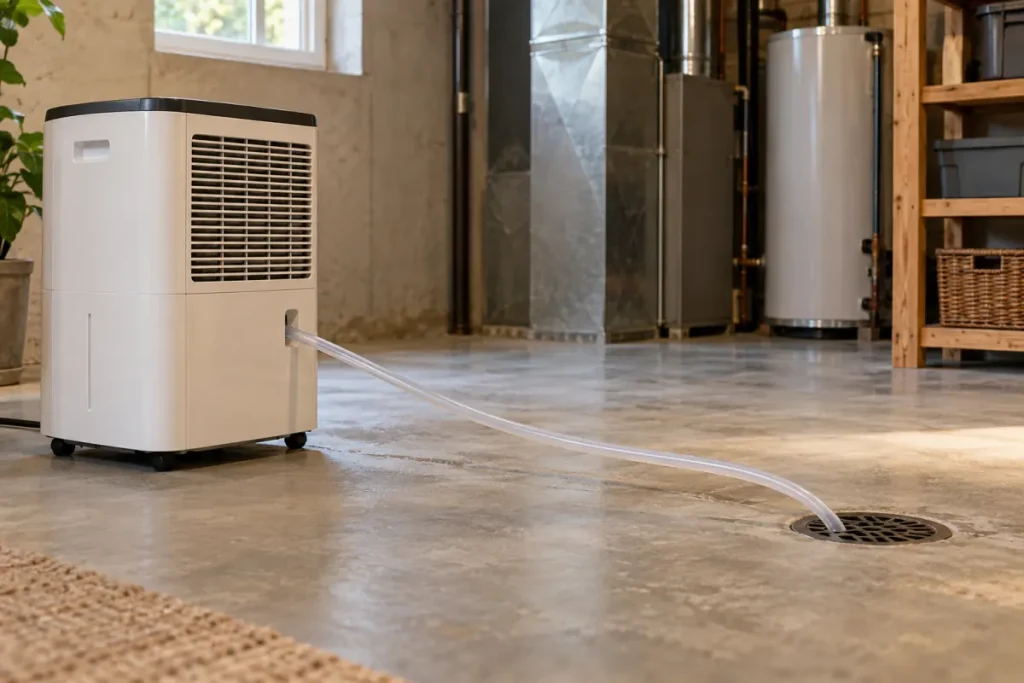
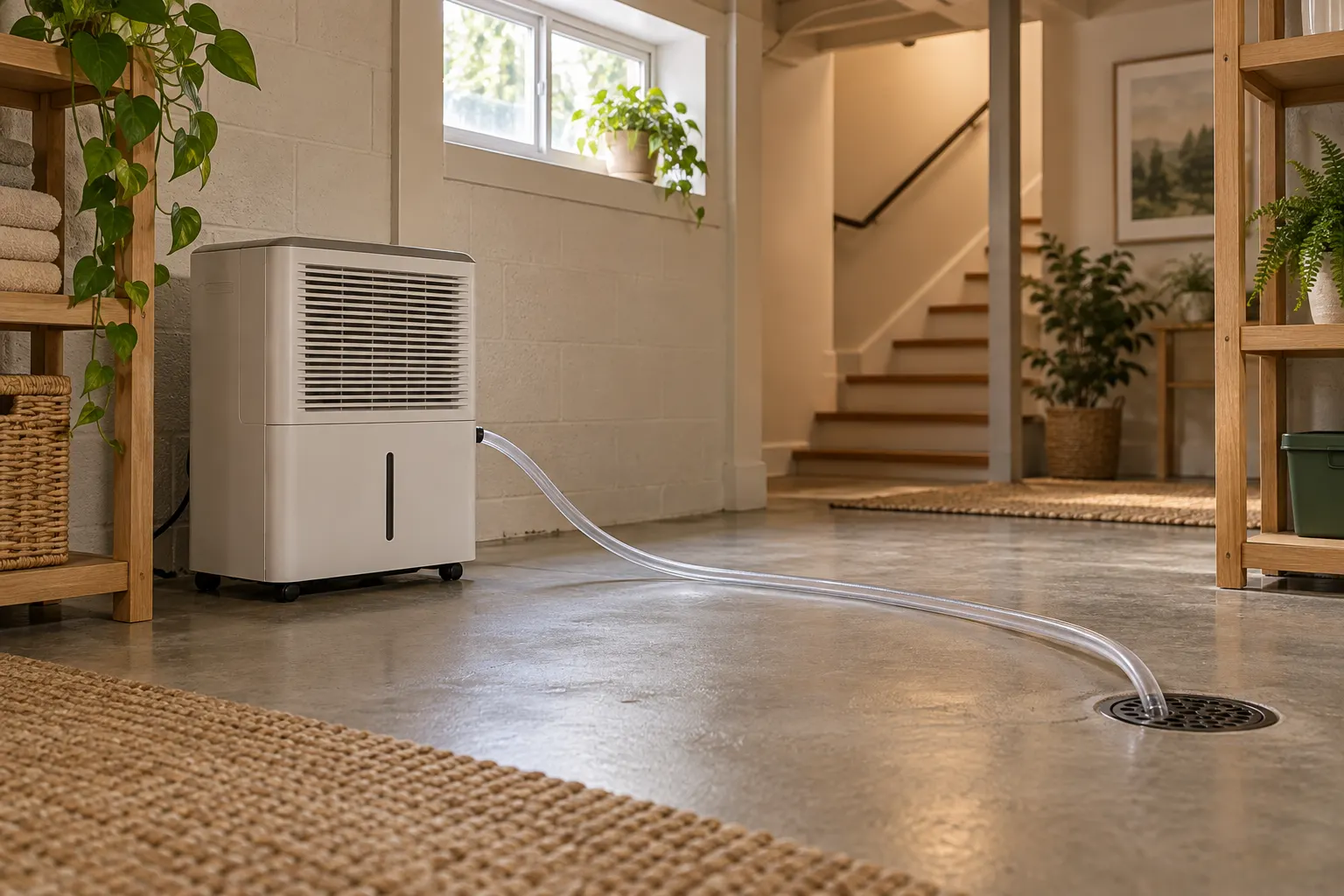
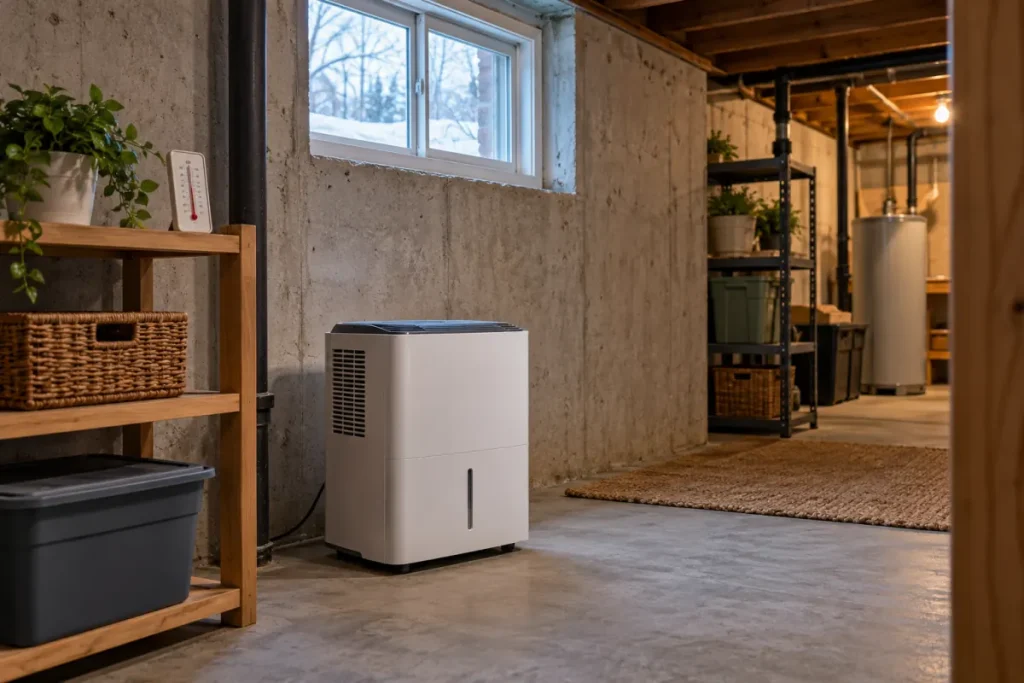
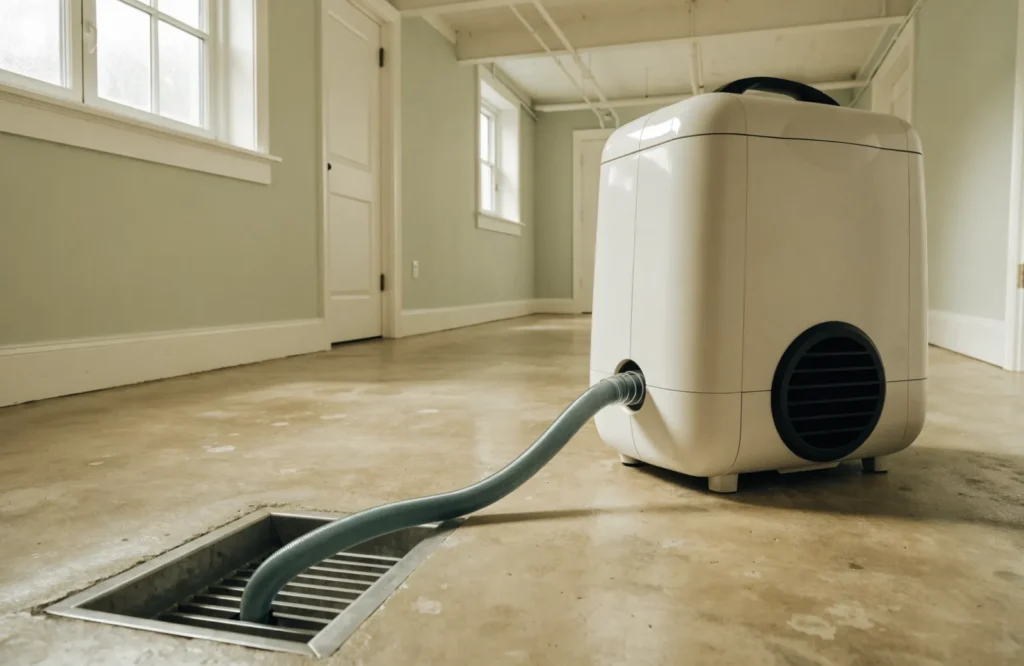
Setup and drainageA Gravity Drain Setup ChecklistA gravity drain needs more than a hose that fits. Before connecting one, confirm that your exact dehumidifier supports gravity drainage, that the water can travel downhill to an appropriate destination, and that the connection follows its manual. This checklist helps you plan and inspect the arrangement. It does not replace your model’s installation instructions. […]Read guide ↗
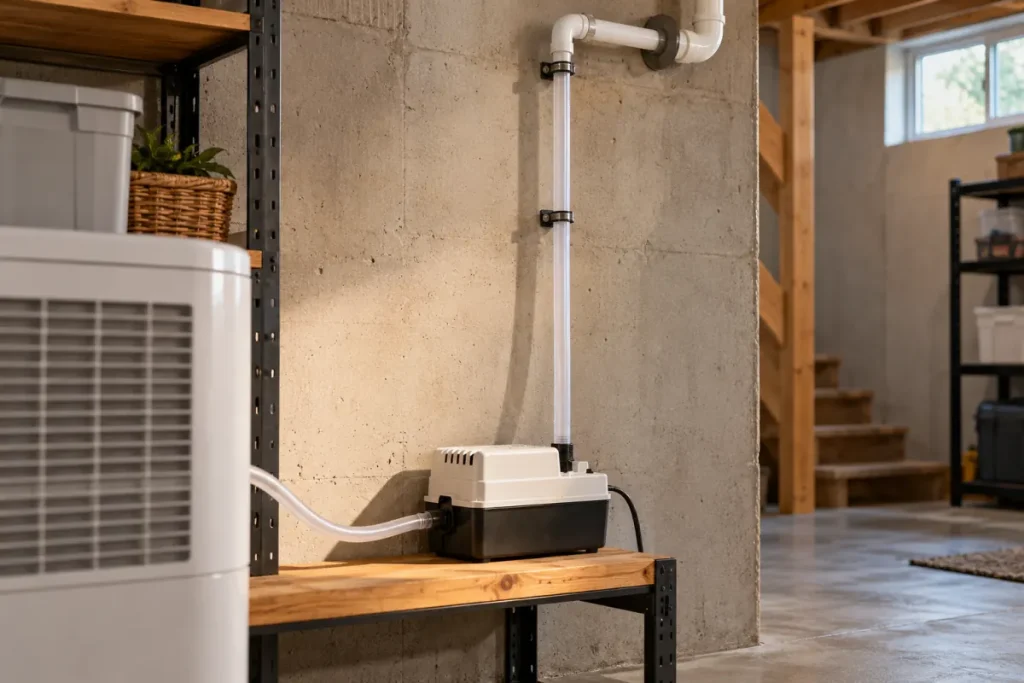
Setup and drainageHow to Read a Dehumidifier Pump-Lift SpecificationA dehumidifier’s pump-lift specification and the length of its drain hose answer different questions. Record the rise in the route, the full tubing path, and the manufacturer’s restrictions separately. A destination that appears close enough on the floor plan may still need a route the appliance does not support. Three measurements to keep separate Vertical […]Read guide ↗
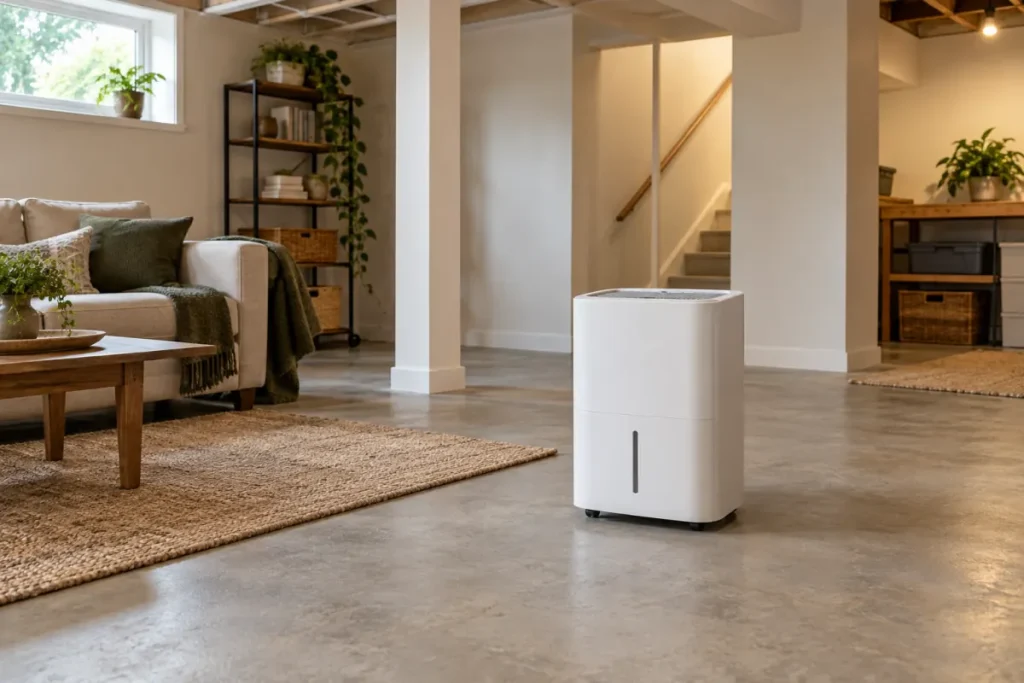
Setup and drainageWhere to Put a Dehumidifier in a BasementChoose a basement dehumidifier location by checking the exact model’s airflow, floor, temperature, electrical, and drainage instructions. Keep space for bucket removal and normal care. A position that looks convenient can still make the supported hose route or required clearance impossible. Start with the model’s placement instructions Find the model number and its owner manual. […]Read guide ↗
Setup and drainageDehumidifier Operating Temperature: What to CheckCheck a dehumidifier’s operating-temperature instructions against the conditions where it will actually run. A capacity label or an automatic-defrost feature does not replace that check. Keep the model, manual revision, permitted range, and room observations together before judging performance in a cool basement. Find the operating range for the exact unit Use the manufacturer’s owner […]Read guide ↗
Setup and drainageBucket vs Gravity Drain vs Pump for a Basement DehumidifierCompare three drainage options by the route water must take, the attention each needs and the limits in your appliance manual.Read guide ↗