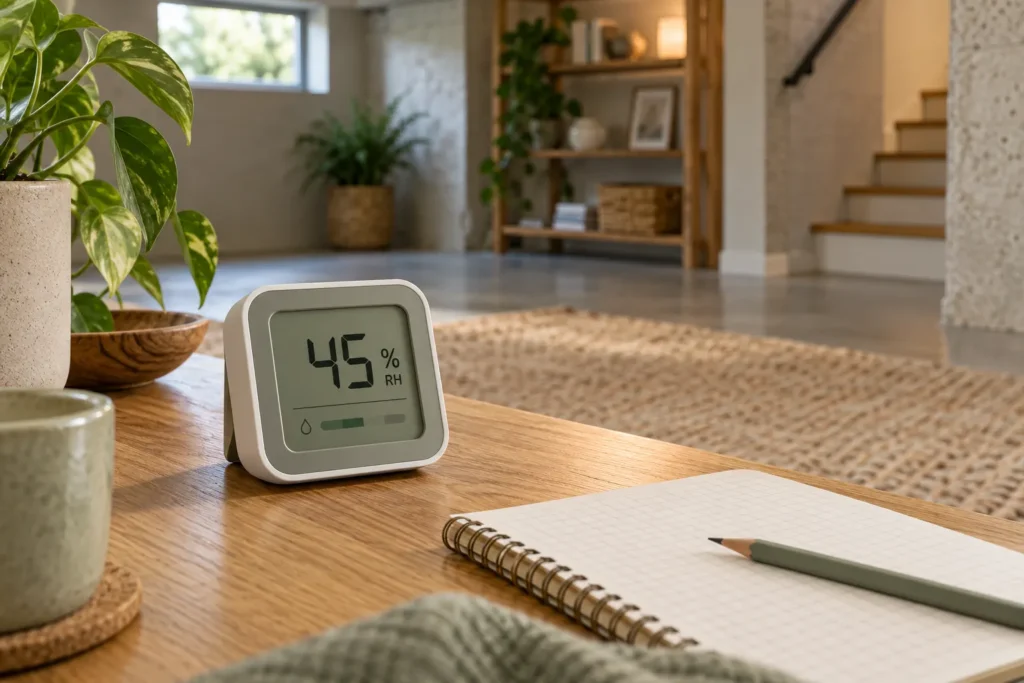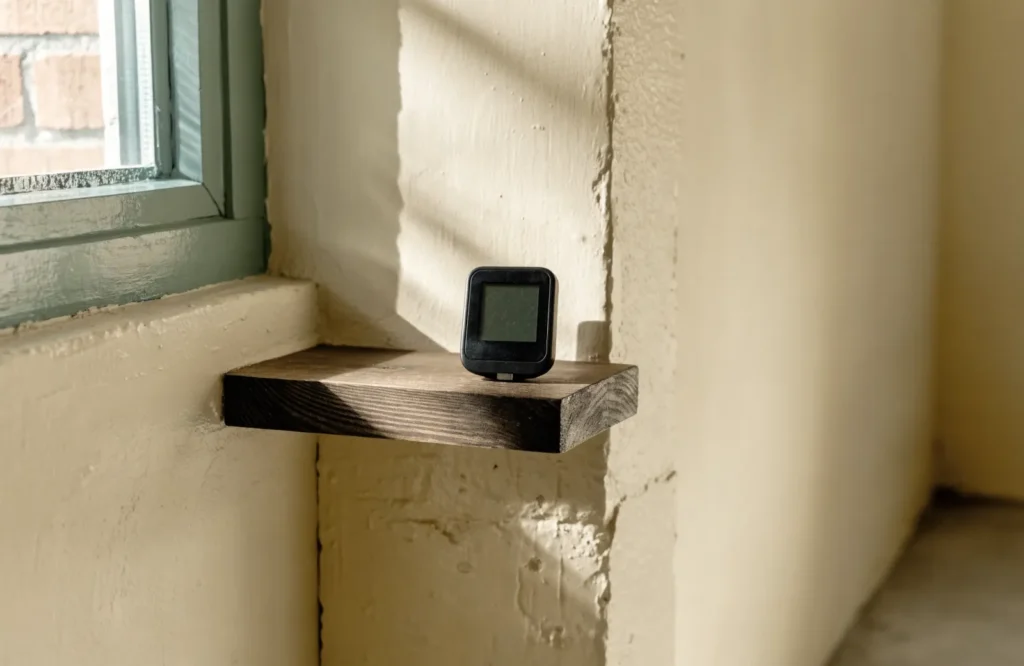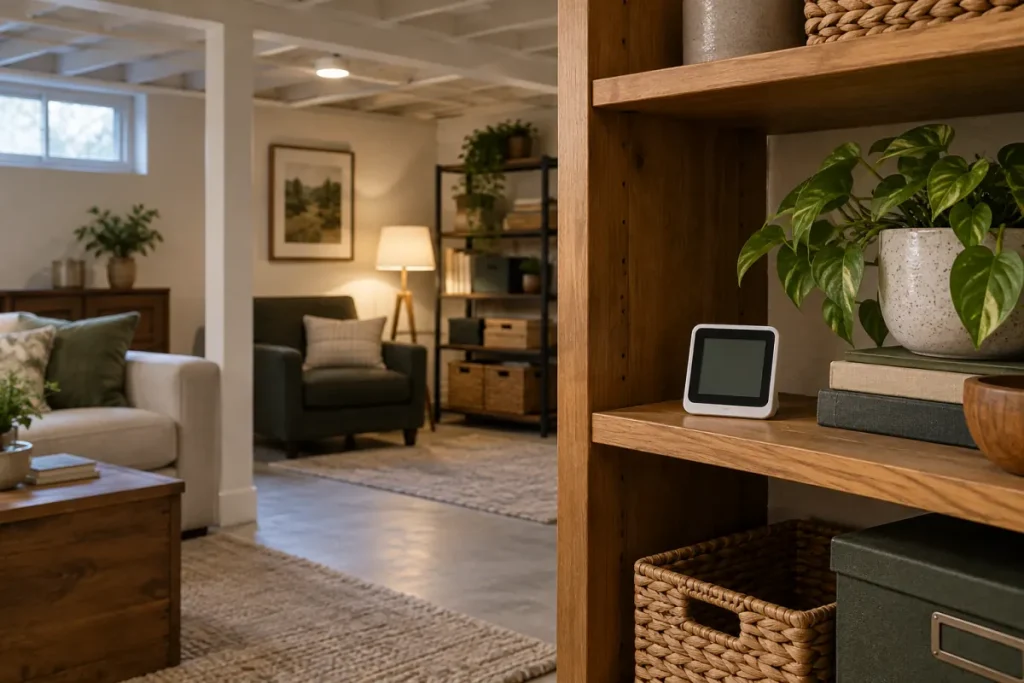
Humidity basicsWhere to Place a Hygrometer in a BasementChoose a spot away from direct sun, vents and dehumidifier discharge. Follow your meter’s instructions and use the same spot for repeat readings.Read guide ↗
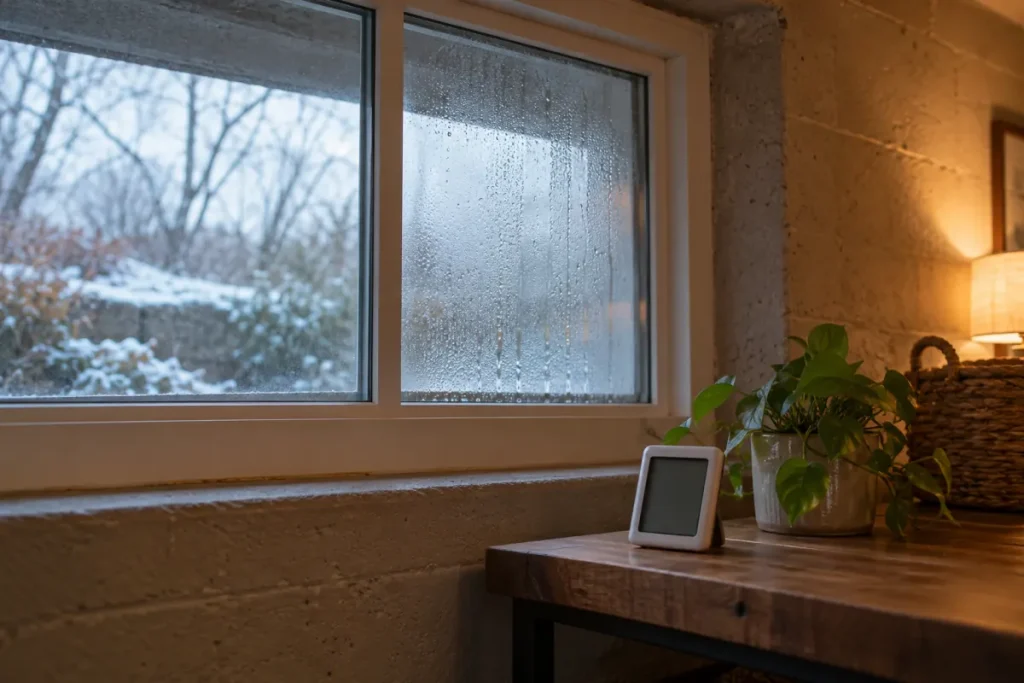
Humidity basicsWhy Basement Relative Humidity Changes With TemperatureRelative humidity can rise as air cools even when the moisture in the air stays the same. Record temperature with each humidity reading.Read guide ↗
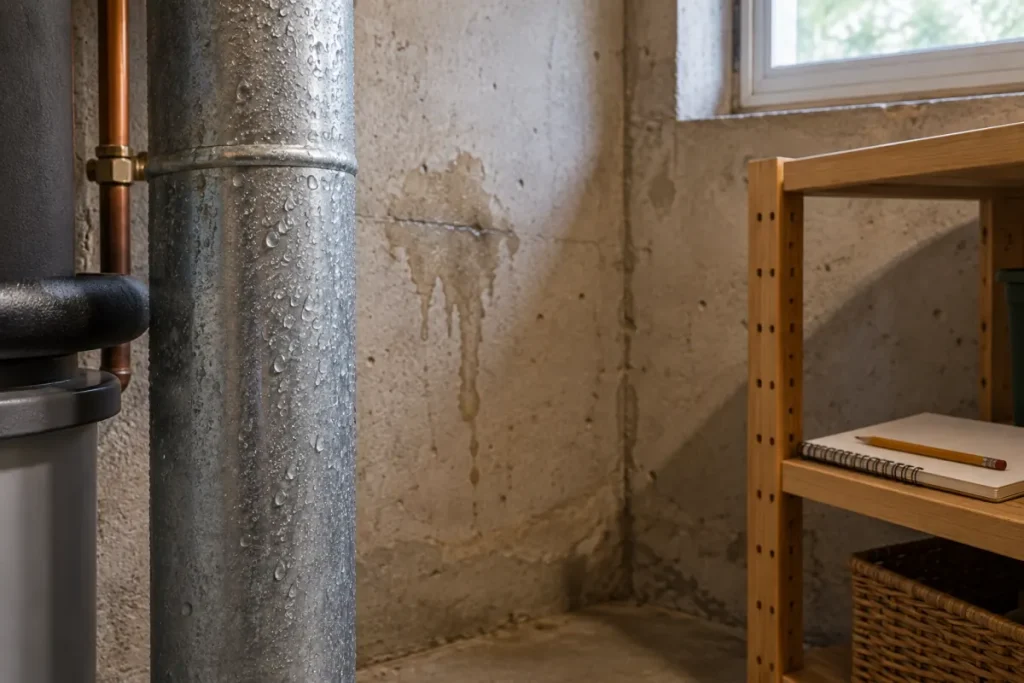
Humidity basicsCondensation or a Leak: What to Record FirstRecord whether droplets form on a cold surface or water comes from a joint. Note when it appears and whether it follows rain.Read guide ↗
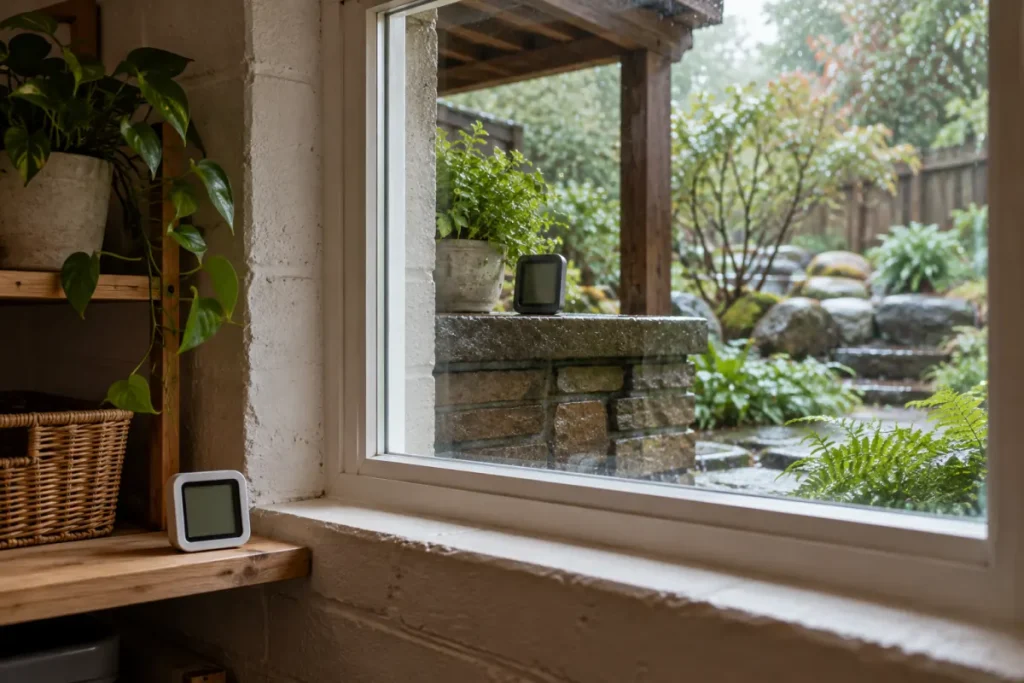
Humidity basicsIndoor vs. Outdoor Humidity: Which Air Is Drier?Compare indoor and outdoor dew points. At similar air pressure, the lower dew point shows which air holds less moisture.Read guide ↗
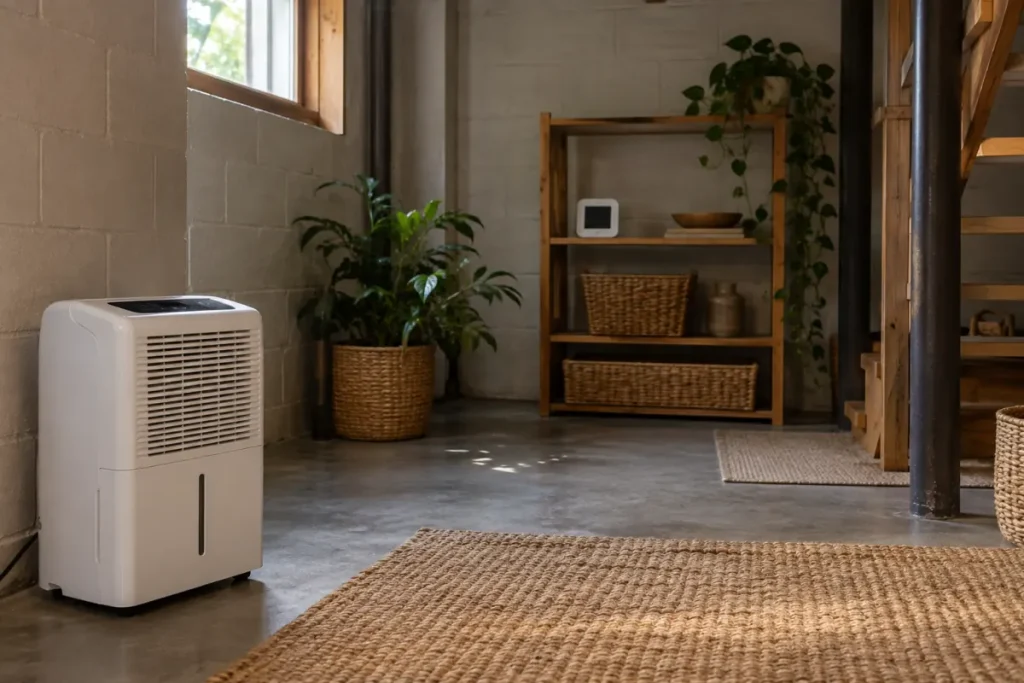
Humidity basicsWhy Your Dehumidifier and Hygrometer Readings DifferFirst check whether the unit shows a setpoint or a current reading. Compare actual readings taken at the same time and note the sensor locations.Read guide ↗
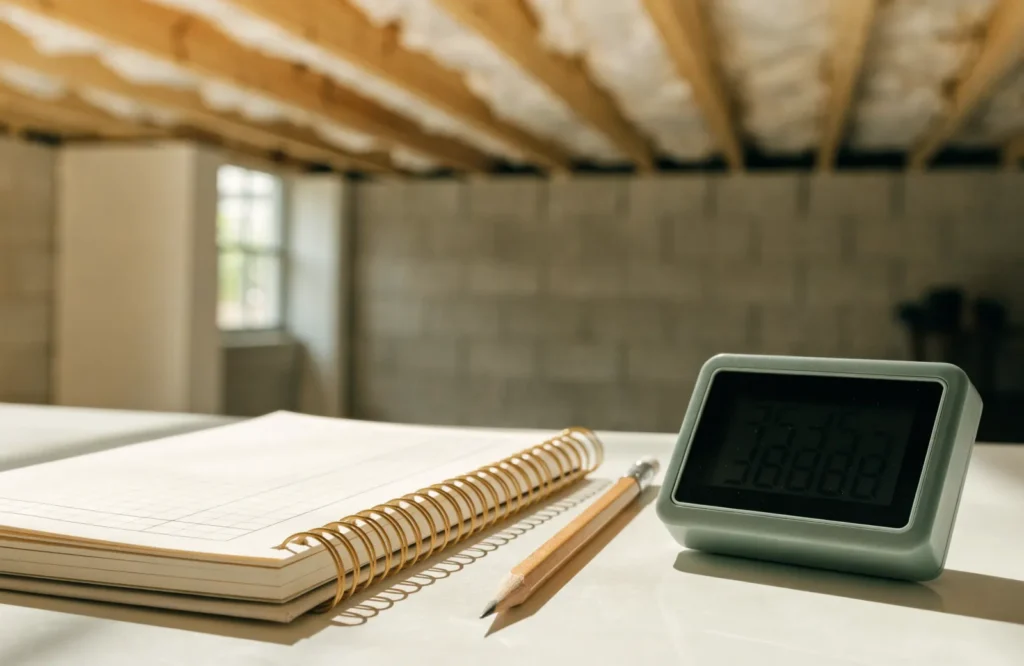
Humidity basicsHow to Keep a Useful Basement Humidity LogA useful humidity log records the room, temperature and conditions alongside each reading. Build a simple routine and export your observations as a CSV.Read guide ↗
Humidity basicsBasement Humidity What to Measure and When to ActOne humidity reading is only a clue. Learn what to measure, which conditions to record and how to turn a basement pattern into a useful next step.Read guide ↗