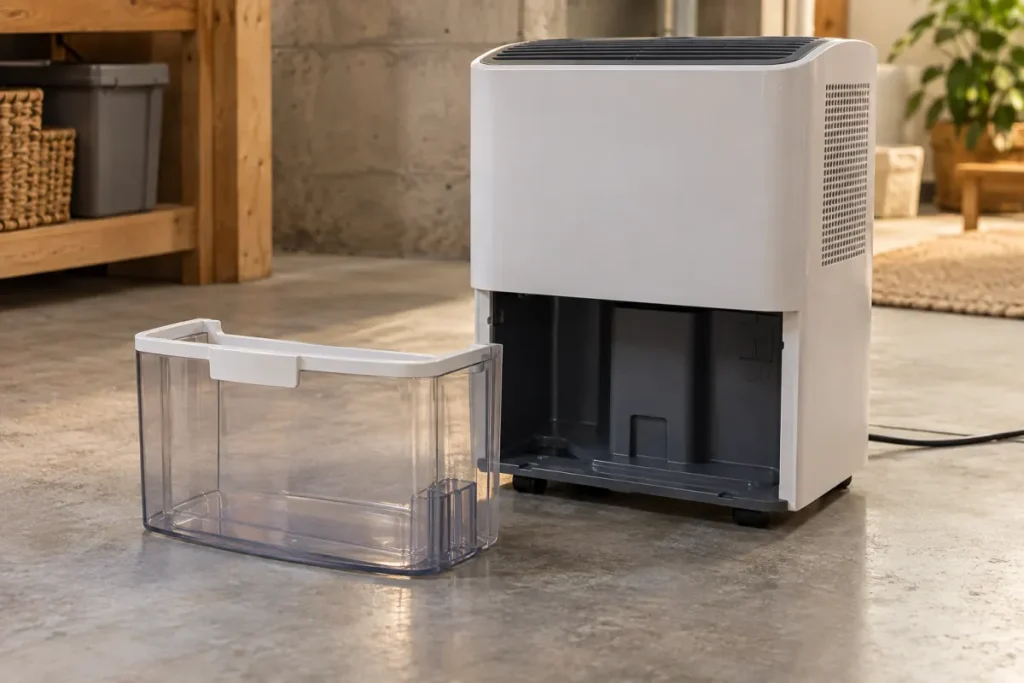
Choosing a dehumidifierPints Per Day vs Bucket Size in a DehumidifierA dehumidifier’s pints per day rating describes how much water it can remove under specified test conditions. Its bucket size describes how much collected water the container holds. They answer different questions: how much moisture can the unit remove, and how often might you need to empty it? Compare both before buying. A large bucket […]Read guide ↗
Choosing a dehumidifierWhat IEF Means on a Dehumidifier SpecificationIEF stands for Integrated Energy Factor. It is a dehumidifier efficiency rating expressed in liters per kilowatt-hour, or L/kWh. It relates water removal to energy use under a defined test. A higher comparable IEF indicates greater rated efficiency; it does not directly tell you the appliance’s wattage, daily collection, or monthly electricity cost. ENERGY STAR’s […]Read guide ↗
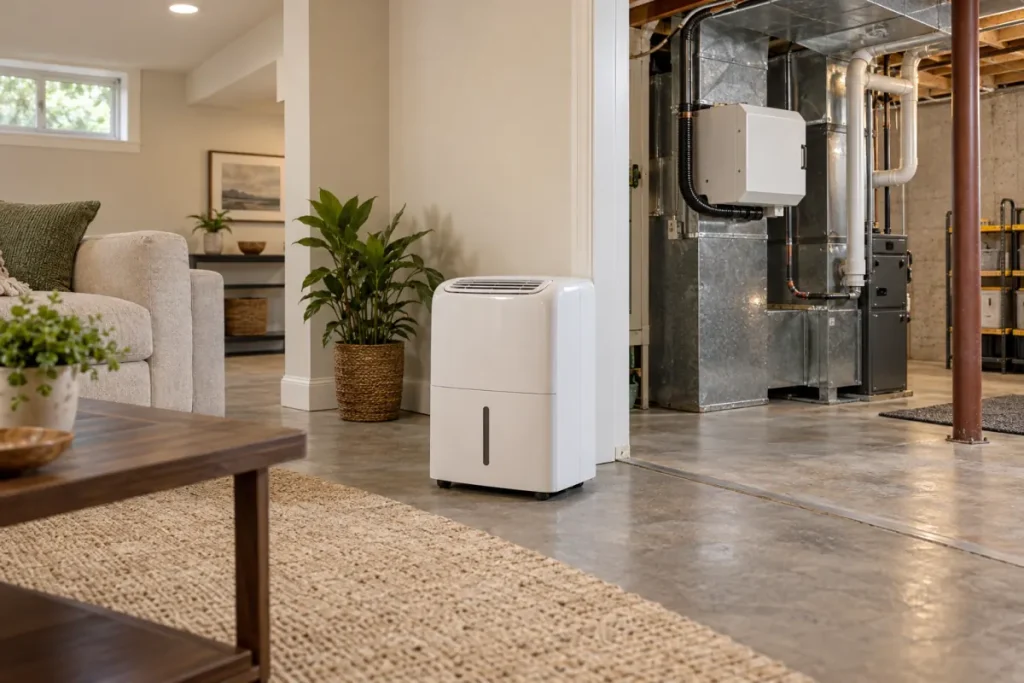
Choosing a dehumidifierA Basement Dehumidifier Buying ChecklistBefore comparing basement dehumidifiers, write down the conditions the appliance must work in and how you will handle the collected water. Then check exact models against those requirements. This checklist helps you build a defensible shortlist without relying on a “best” label or the largest number in a listing. We have not tested or ranked […]Read guide ↗
Choosing a dehumidifierPortable vs. Whole-Home Dehumidifiers: Define the ScopeStart a portable-versus-whole-home comparison by identifying the spaces that need attention. A record from one basement position is a different brief from repeated observations across several rooms. Keep the room evidence, drainage needs, and installation questions together before choosing the type of equipment. What the two options usually describe ENERGY STAR’s buying guidance describes portable […]Read guide ↗
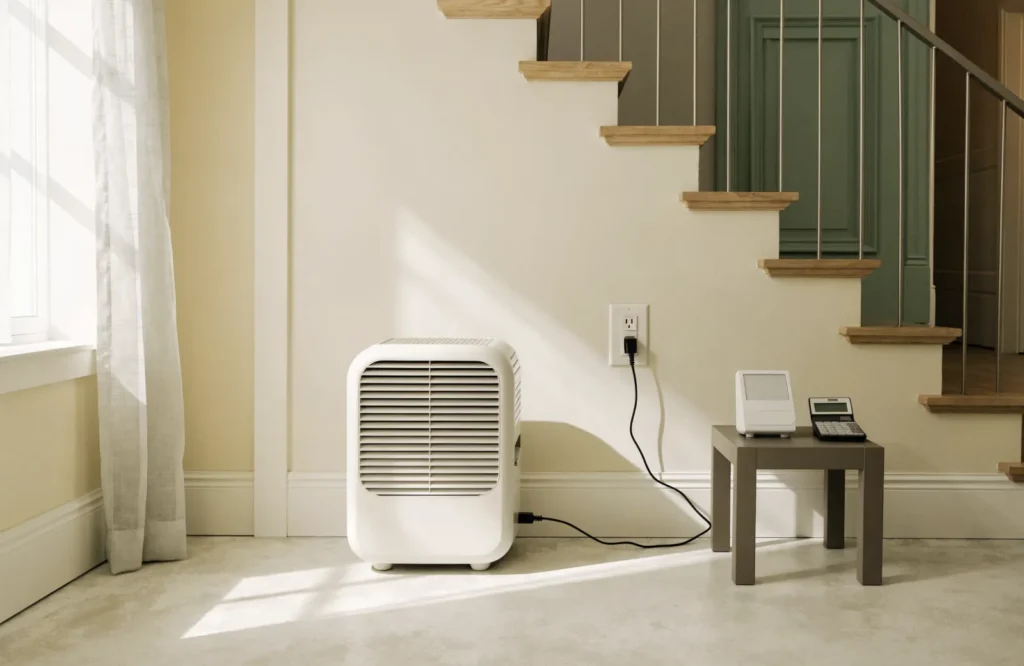
Choosing a dehumidifierDehumidifier Running Cost Calculator and Worked ExamplesEstimate dehumidifier electricity cost with your own wattage, hours and rate, or use measured kWh. See the assumptions behind every result.Read guide ↗