In brief
A useful dehumidifier maintenance record keeps three things together: what your model’s manual requires, what you actually did, and what you observed afterward. It should help you follow the appliance’s instructions, not impose the same cleaning schedule on every unit.
Download the blank maintenance record and keep a separate entry for each task, grouped by appliance. The template is an editorial organizer; it is not a manufacturer’s service schedule or a record of maintenance performed by our team.
Start with the model and its instructions
Record the exact model, manual URL or filename, relevant page or section, and the date you checked it. Keep personal purchase details and serial numbers privately if you need them for support; they are unnecessary in a public example.
For each task, copy only the instruction that applies to your model into your working record. Separate user maintenance from procedures reserved for service personnel. If you cannot identify the manual or the part is not described as user-accessible, ask the manufacturer before attempting the task.
GE’s cleaning and maintenance guidance distinguishes older and newer designs, including different filter access and reminder arrangements. That is a useful reason to keep the model and reference beside the task rather than relying on a generic checklist.
Give each task a clear record
| Field | Purpose |
|---|---|
| Task and manual reference | Identifies the authorized procedure, not just “cleaned unit” |
| Due basis | Distinguishes a calendar interval, operating hours, reminder, or condition stated by the manual |
| Date completed and person | Records an actual action; leave completion blank for a future task |
| Before and after observations | Preserves visible condition and outcome without claiming a diagnosis |
| Reminder reset | Separates resetting a notification from completing the underlying maintenance |
| Next check and follow-up | Shows whether a task is complete, still uncertain, or awaiting support |
Use plain descriptions: “Filter removed and cleaned using manual section X; reinstalled after drying as instructed” is more useful than “fully serviced.” Do not mark work completed because someone intended to do it or because a reminder disappeared.
Build the list from the parts you actually have
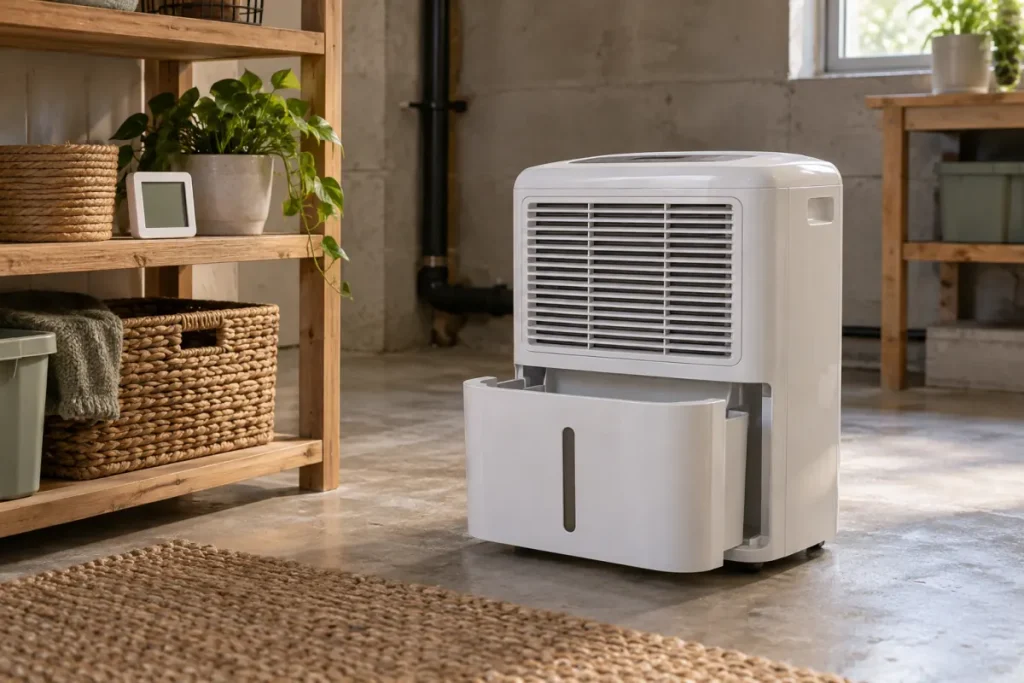
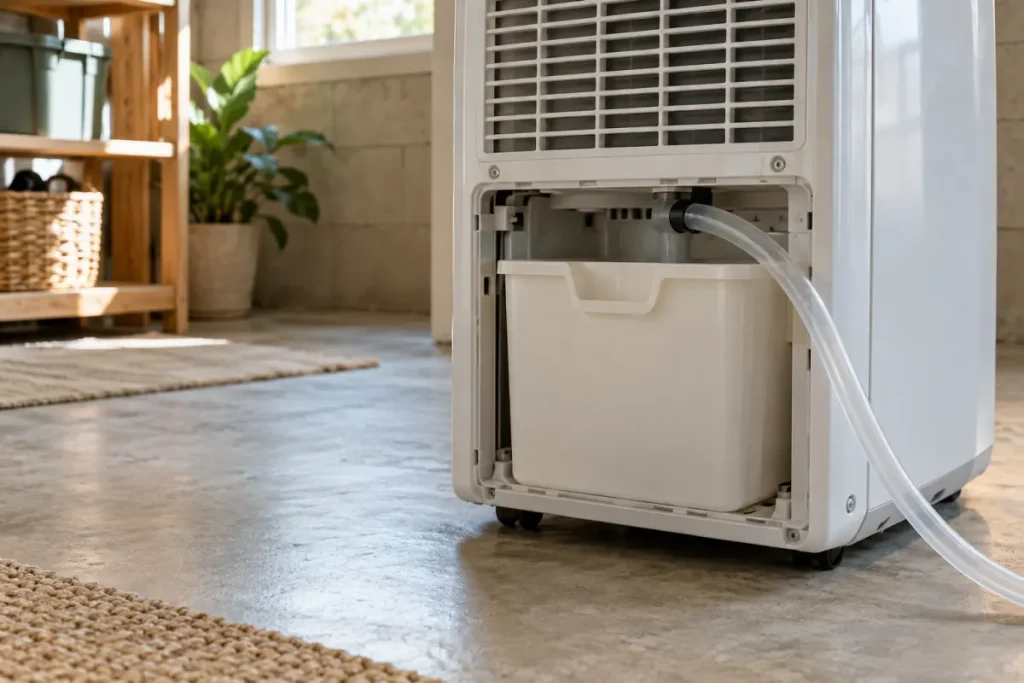
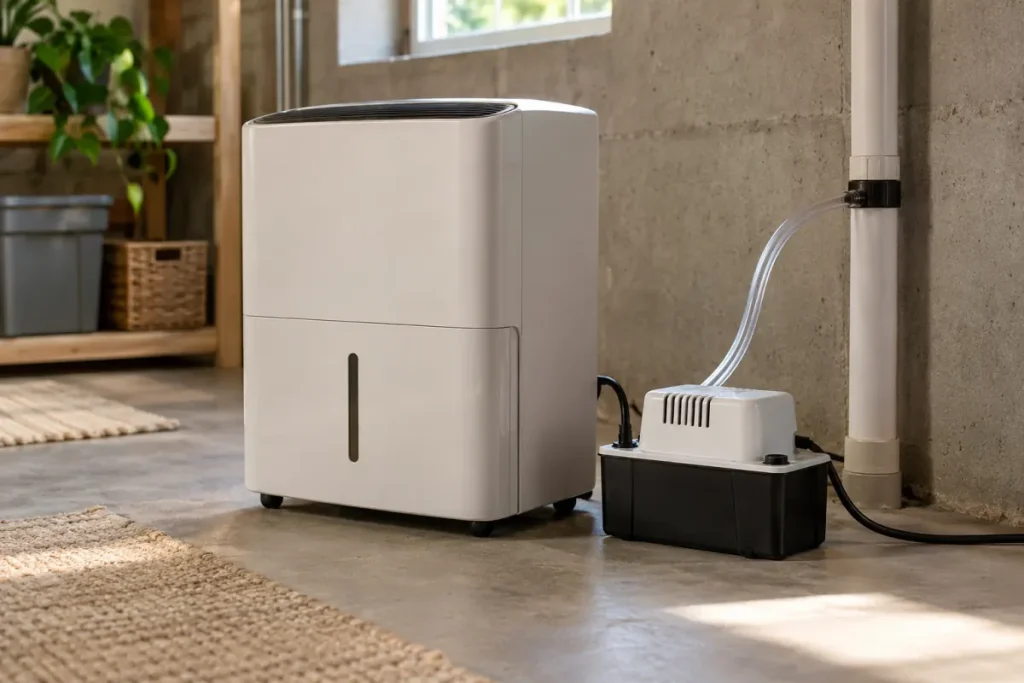
A bucket-operated appliance, a gravity-drain arrangement, and a pump model may need different records. Start with the maintenance items in the manual. Possible headings include the user-accessible filter, bucket, external grilles and case, and the drainage arrangement where applicable.
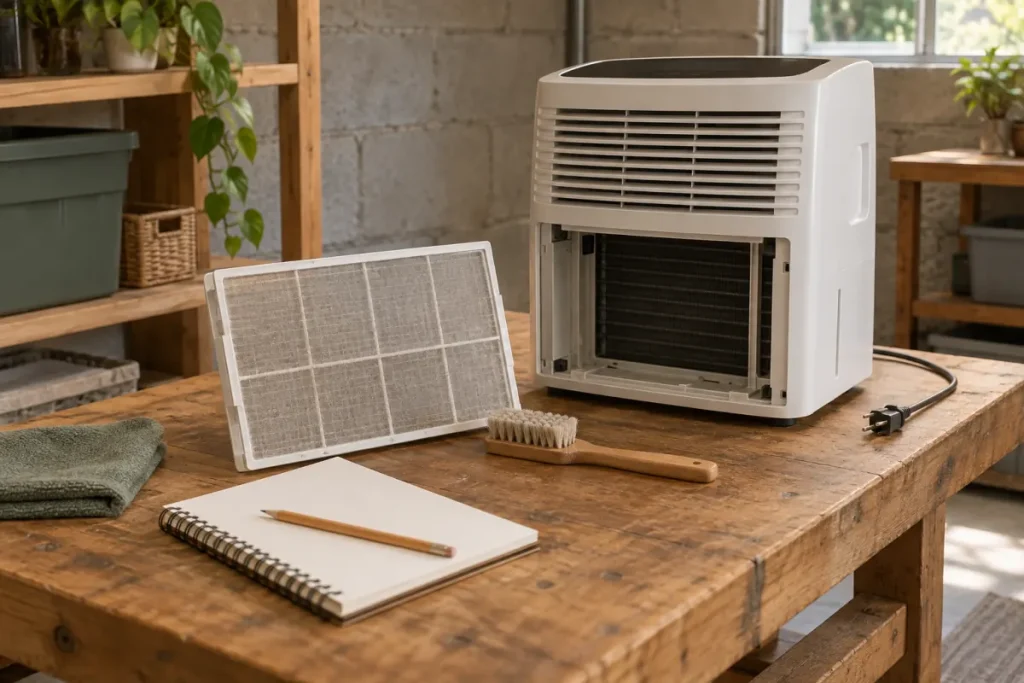
GE’s air-filter guidance discusses removing the filter according to the owner’s manual and drying it before replacement. Do not assume that every filter is washable or that another unit uses the same access method.
GE’s cleaning page begins with unplugging before maintenance. Its methods distinguish the exterior and collection bucket. Record the approved method for the particular part; a cleaner suitable for one surface is not automatically suitable for another.
For a hose arrangement, record any externally visible change such as a kink, damaged section, or leak. Keep the route notes from our gravity-drain planning checklist. Hose cleaning or disconnection should follow the appliance’s instructions rather than an improvised internal-cleaning procedure.
Handle reminders and uncertain dates honestly
If the manual uses operating hours, record those hours when available. If they are unknown, write “unknown”; do not silently convert them into days. A reminder light records a control’s state, not proof that the filter has been cleaned.
When a calendar interval applies, record its basis and next date yourself. Our CSV does not automatically calculate a service interval or declare a task overdue. Choose any additional observation routine separately and label it as your own, while keeping the manufacturer’s requirements visible.
Use the record when something changes
Note changes to placement, drain routing, settings, or user-accessible parts alongside maintenance. If collection changes afterward, the sequence is useful context; it does not prove that one action caused or fixed the issue.
Use our water-collection observation guide to prepare a support request if needed. A short, accurate record of completed checks is more helpful than repeatedly performing unrecorded resets or marking every problem as a maintenance fault.