In brief
Start a portable-versus-whole-home comparison by identifying the spaces that need attention. A record from one basement position is a different brief from repeated observations across several rooms. Keep the room evidence, drainage needs, and installation questions together before choosing the type of equipment.
What the two options usually describe
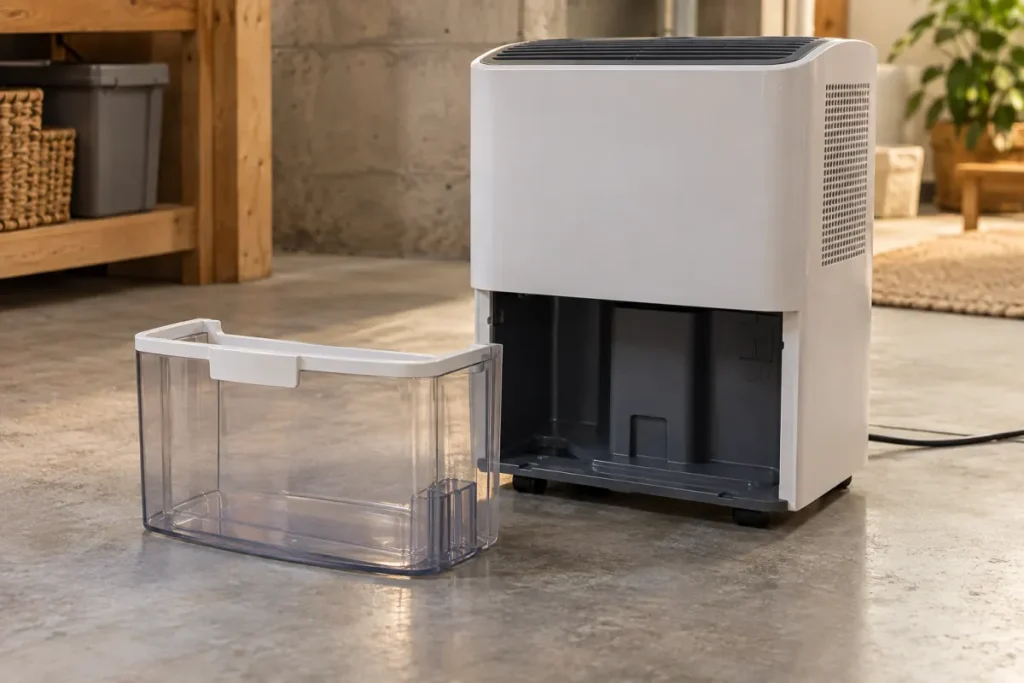
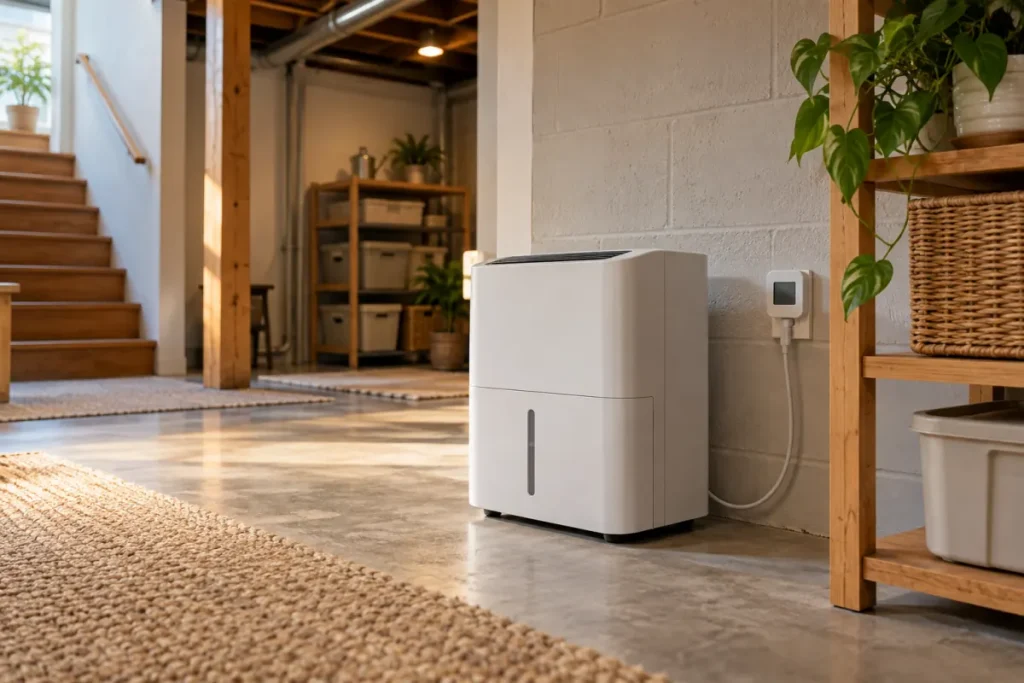
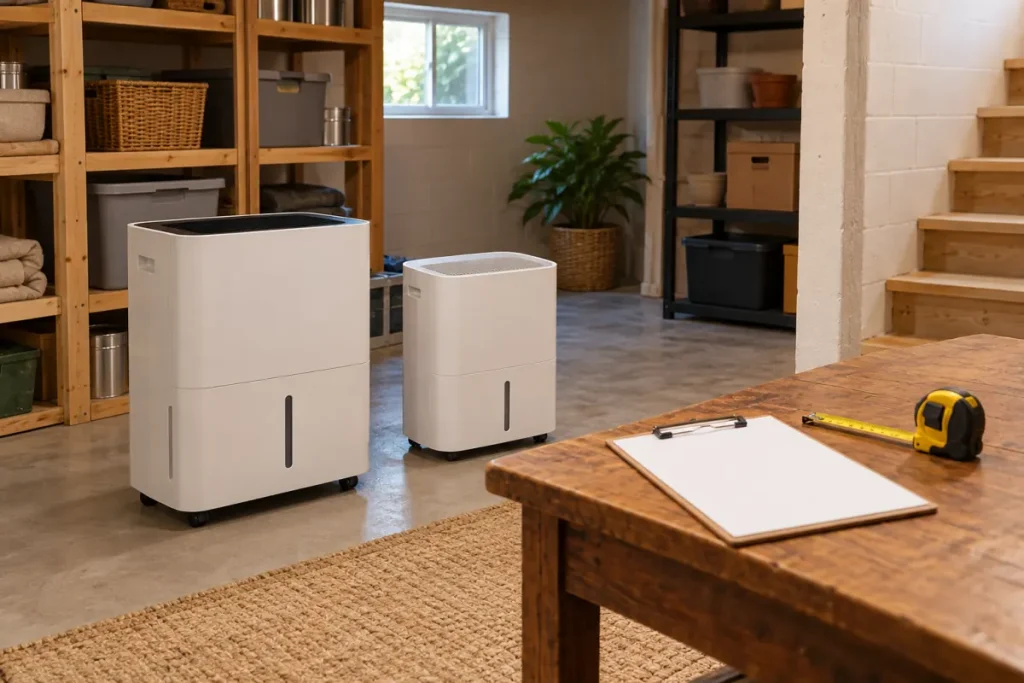
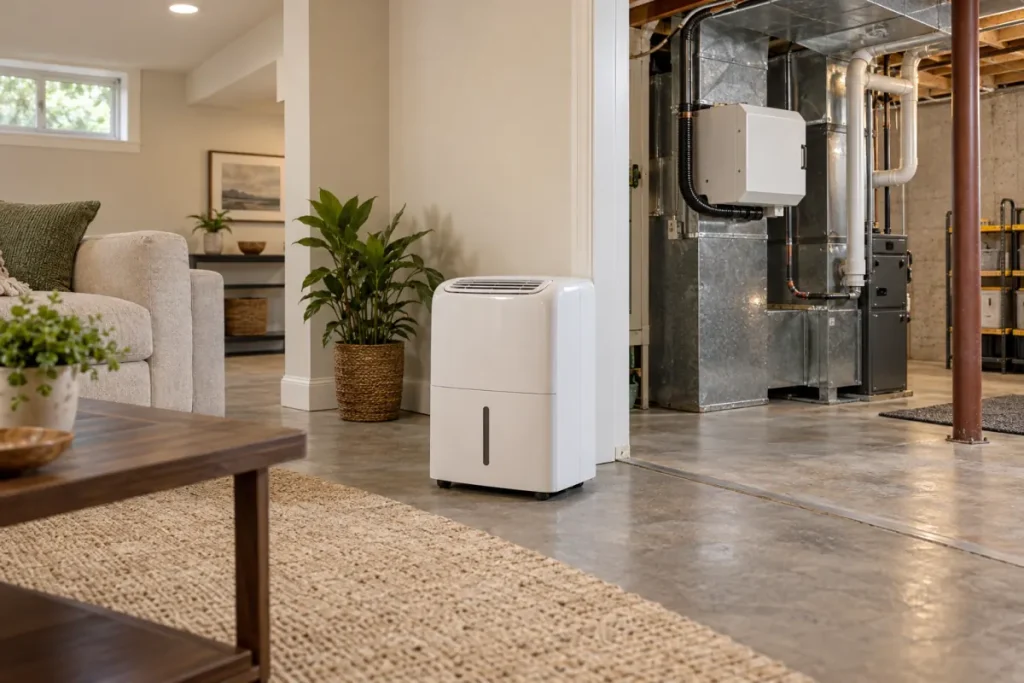
ENERGY STAR’s buying guidance describes portable units as equipment typically used for one room or space. Whole-home units generally use ductwork to serve one or more rooms and are often permanently installed. The exact equipment and installation design determine which spaces are actually served.
These labels do not show that one appliance will solve your building’s moisture problem. First write down where readings were taken, whether water is visible, and which locations you want an assessment to cover. The humidity log helps preserve the basement observations.
Define the spaces before comparing products
Make a short list of the rooms you are concerned about. For each one, record a named meter location, date and time, relative humidity, temperature if available, and relevant conditions. Keep separate rooms as separate entries. Do not turn a damp-storage-corner reading into a claim about every upstairs bedroom.
If you currently have only a basement record, mark the other rooms as unmeasured. That is an honest starting point for a conversation about scope. If you observe visible water, document and address its source rather than treating a larger appliance as the proposed repair.
| Question | Portable-unit brief | Whole-home assessment brief |
|---|---|---|
| Which spaces are the concern? | Name the intended room and monitoring positions | List each room and the evidence available there |
| What is the proposed arrangement? | Record the model’s location and drainage requirements | Ask which spaces the proposed design will serve |
| Who will check the setup? | Use applicable owner instructions and seek help for unresolved requirements | Ask an HVAC professional to assess sizing and installation |
| What will be maintained? | Identify the model’s owner-care tasks | Request the installed system’s access and maintenance plan |
Compare the complete arrangements
For a portable candidate, check its operating-temperature range, permitted placement, bucket or hose method, and access for normal care. Our appliance-placement guide and buying checklist keep these requirements beside the product specifications.
For a whole-home proposal, ask an HVAC professional which rooms are included, how the proposed equipment connects to the building, where collected water goes, and how the controls and maintenance access will work. ENERGY STAR discusses professional sizing and installation, including drainage for these systems. This article does not provide duct or electrical installation instructions.
Request a written description of the included work and assumptions. An equipment price and an installed-system quote are different scopes. Keep installation, required accessories, routine care, warranty terms, and any known operating-cost assumptions separate so an omitted item does not disappear inside a single total.
Choose an observation that can assess the result
Before changing the arrangement, decide where and how you will record subsequent readings. After a supported setup is in use, keep the locations and conditions visible. If the proposal covers several rooms, record those rooms rather than using only the display on the appliance.
A useful account describes what changed at the monitored places and what remains unresolved. For example, a lower reading at one named position cannot confirm performance in an unmeasured room. This is an observation principle, not a formal performance test or a promise about a particular product.
When to revisit the scope
If a running portable unit leaves the recorded problem unresolved, review our high-humidity observation guide before assuming that whole-home equipment is required. It helps separate the room readings, setup, drainage interruptions, and known moisture sources.
Use the resulting record to ask a more specific question: which spaces need attention, what has already been checked, and what should the proposed arrangement accomplish there? That brief makes a product comparison or professional assessment more useful than choosing solely from the label “portable” or “whole-home.”