In brief
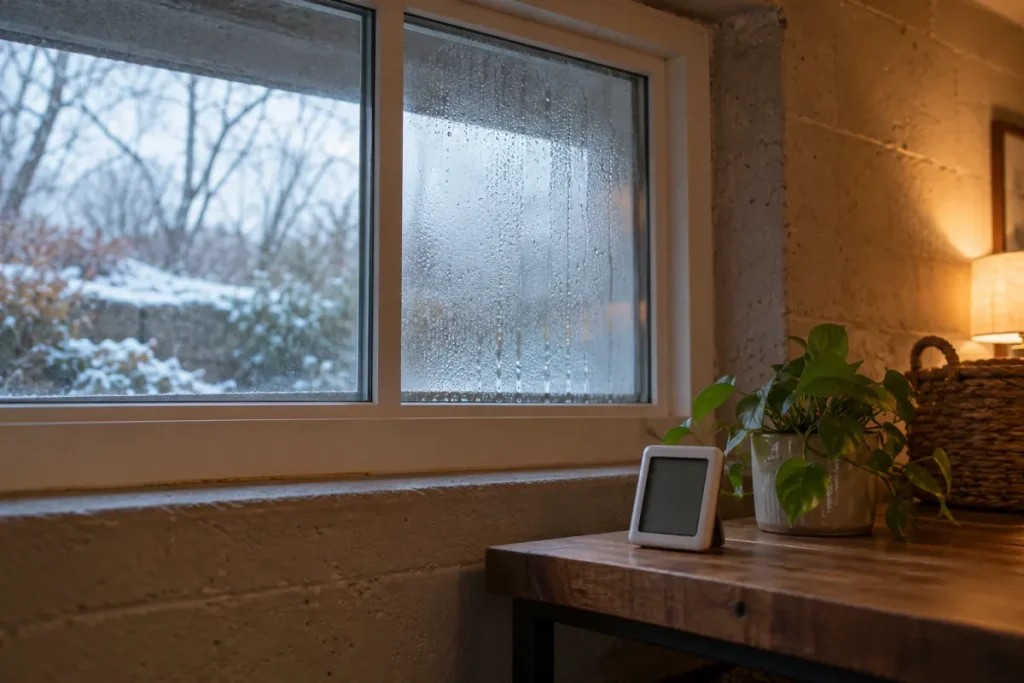
For a useful basement humidity baseline, place your hygrometer where it can represent the area you want to monitor, following its own placement instructions. Keep that position consistent. A meter beside a dryer, in direct sunlight, or in the dehumidifier’s discharge air may describe a local condition rather than the wider room.
There is no single position that answers every question about a basement. Choose the question first: ordinary room conditions, differences between zones, or the conditions near a particular problem.
Read the placement instructions for your meter
Find the exact model number and its manual. As one documented example, the AcuRite 01130/01131 manual calls for a dry, clean location away from sunlight, heat sources, vents, and sources of humidity. Those instructions apply to those monitors; they are not a tested placement rule for every meter.
Check whether a remote sensor or the display itself takes the humidity reading. The convenient place to read the screen is not necessarily the place where the sensing element sits. Also check the operating range and any instructions about settling after a move. Avoid assuming that an update interval on a specification sheet is the time required to adapt to a new location.
Give each location a purpose
The following plan is our suggested way to organize observations. The location names are examples, not prescribed heights or distances.
| Question | Example location label | How to use the result |
|---|---|---|
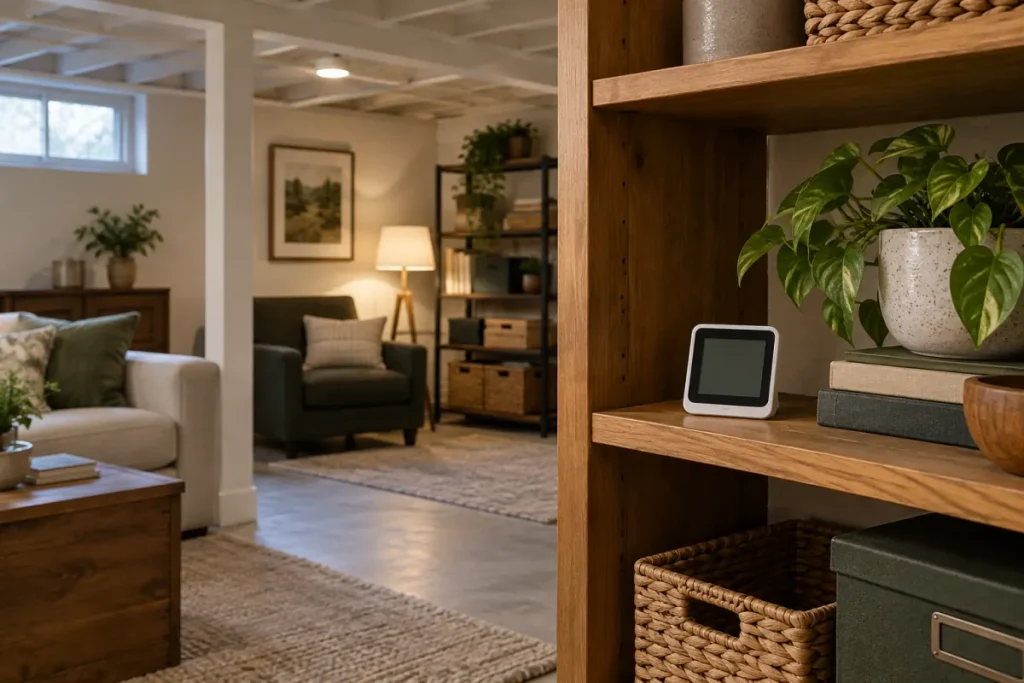
| What are conditions in the area we use? | A: open shelf in the occupied area, positioned according to the manual | Keep this baseline location for later comparisons |
| Does another area behave differently? | B: separate storage area with its own placement notes | Compare it with A while retaining each location’s temperature and timing |
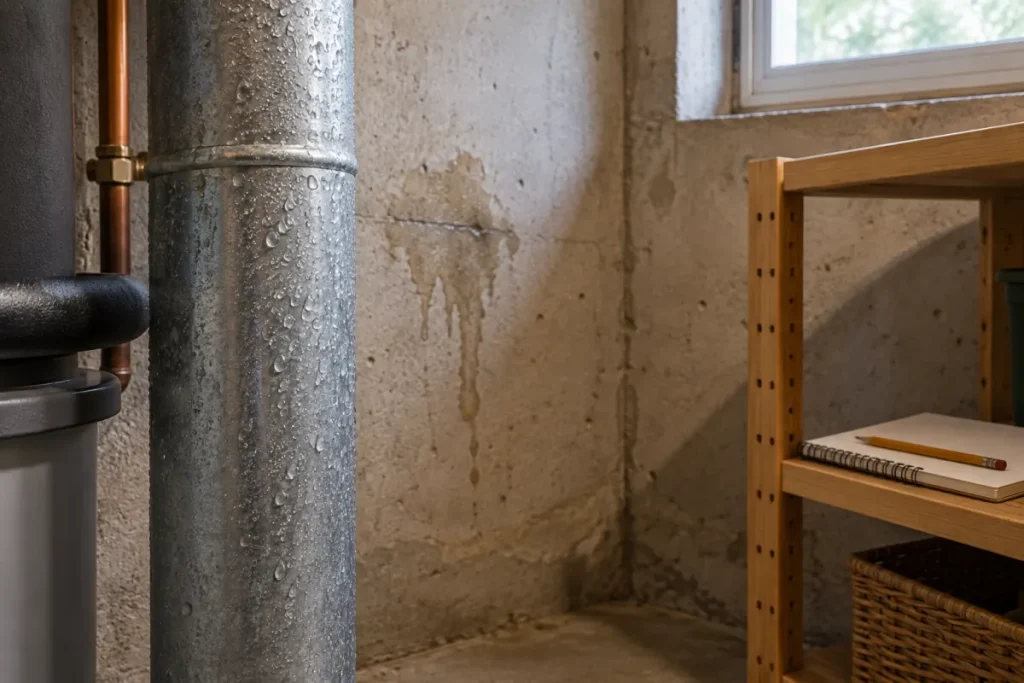
| What happens near a wet patch? | C: a permitted dry position near the area of concern | Keep the observation separate; it does not measure moisture inside the material |
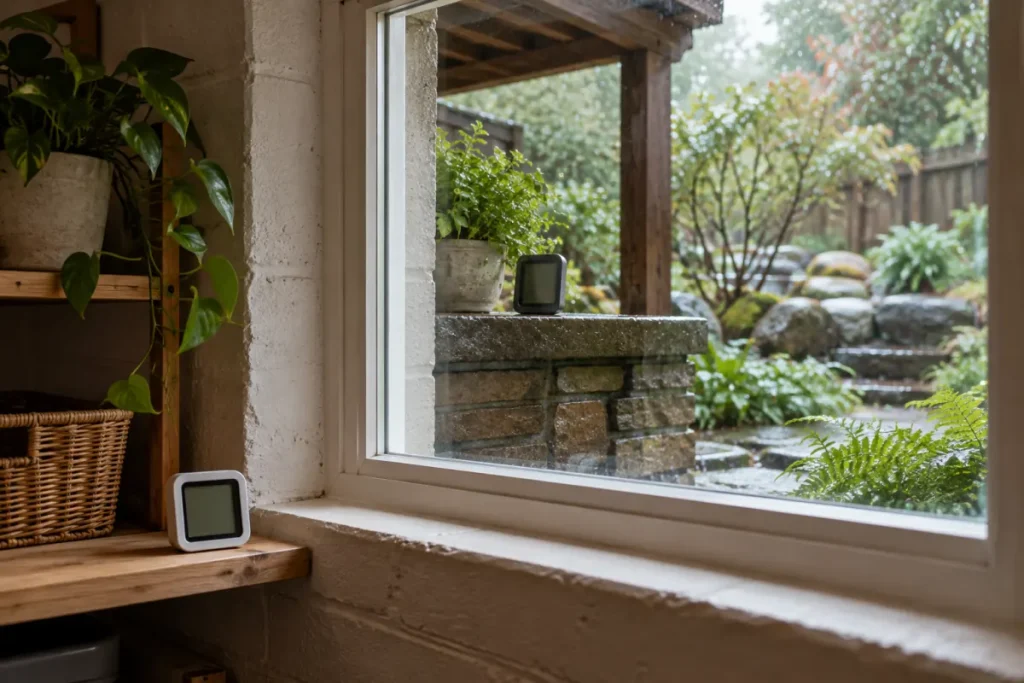
If you only have one meter, moving it between A and B produces readings at different times. That can be useful, but it does not establish a simultaneous difference between the areas. Mark the move and follow any settling instructions. If you use two meters, identify both models so instrument differences remain visible in the record.
Keep a small location record
Write down the meter model, the location label, the supporting surface, nearby vents or appliances, and the reason you chose that position. A quick private sketch can make “shelf near stairs” easier to reproduce. Mark where the sensor actually sits, including a separate sensor if present.
Record the time, humidity, temperature when available, and whether the dehumidifier was running. The National Weather Service explains that relative humidity depends on temperature. Two percentages from locations at different temperatures do not, by themselves, reveal which area contains more water vapor.
Use our humidity log for the readings. Keep the same label when the position stays the same, and create a new label or clear note when it changes.
Avoid turning a convenient spot into a room measurement
The top of the dehumidifier may be easy to reach, but it places the meter close to the appliance. The farthest corner may matter for stored belongings, but it may not represent the area where you spend time. A reading from either position should be described with its location.
Choose a stable, accessible spot that meets the meter’s instructions. Do not put the device on a wet surface, block an appliance grille, or move the appliance simply to make its display agree with the meter. If the two readings differ, use our comparison guide to check display meaning, location, and timing before changing settings.
Use placement to improve the next decision
A consistent baseline helps you recognize a change; a deliberate second location helps you ask whether that change is local. Neither identifies the source of visible water. Record wetness separately with our moisture observation guide, and use the basement humidity guide for the wider context.
After choosing a location, leave it consistent long enough to answer your observation question. Improve the notes before buying extra meters: knowing where and when a reading came from often makes it substantially more useful.