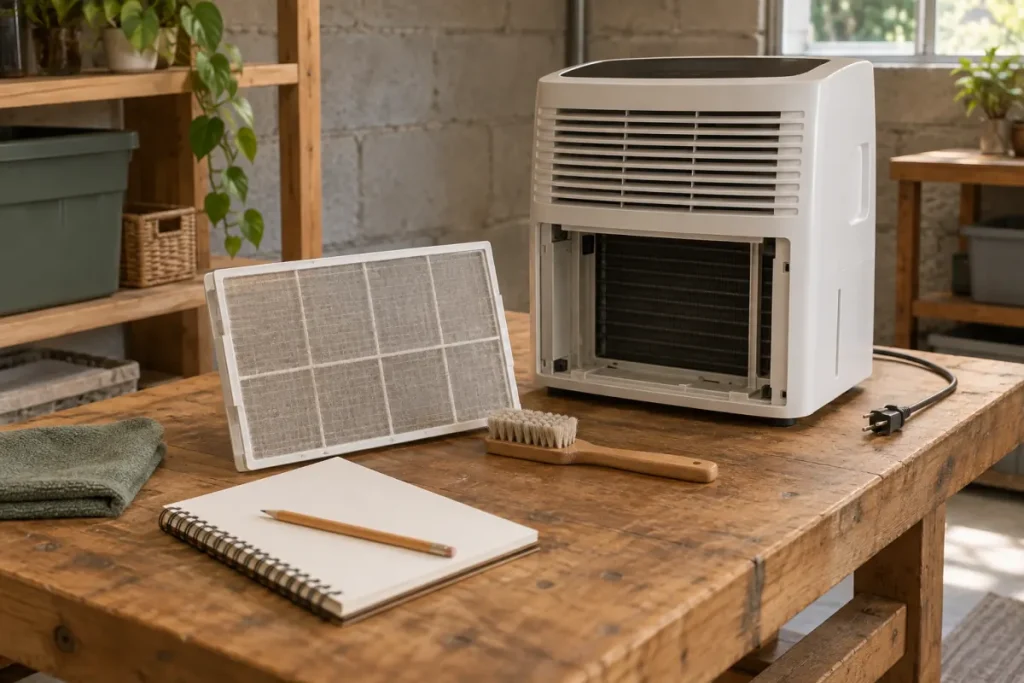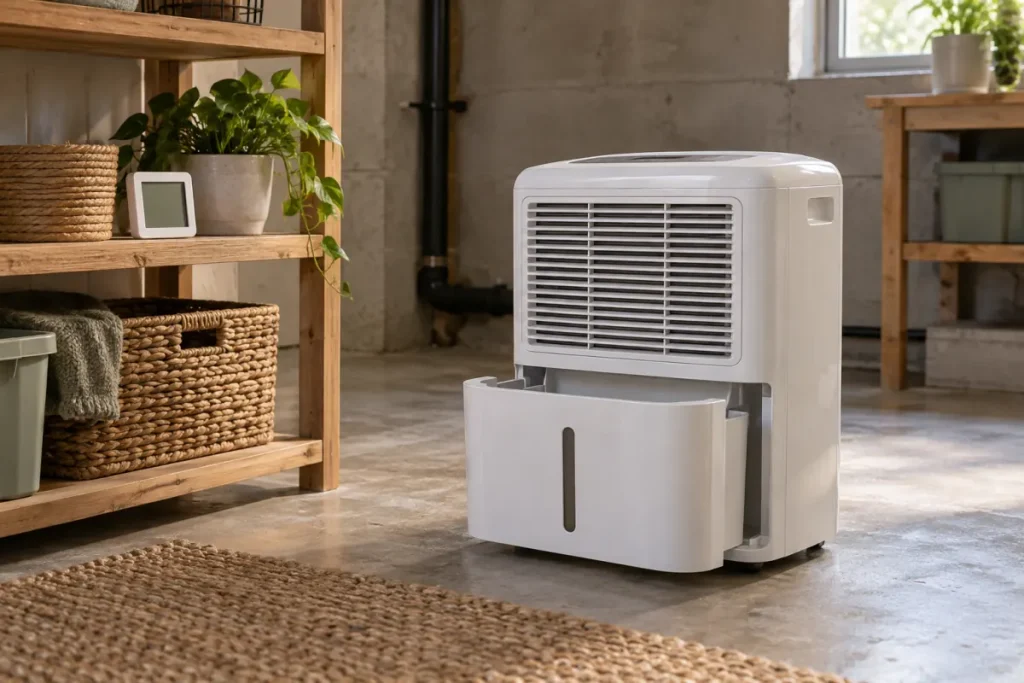
Before storing a portable dehumidifier for a season, follow its manual to turn it off, unplug it, empty collected water, clean the user-accessible parts, and let them dry. Keep it upright in a suitable dry storage space. Check model-specific drainage, refrigerant, and restart instructions rather than applying one universal waiting time or cleaning method.
Decide whether the room still needs moisture control
A date on the calendar does not describe the conditions in your basement. Before retiring the appliance, record the room’s readings and visible moisture concerns. Our basement humidity guide helps organize that assessment. A leak or persistent dampness needs its own response.
Find the exact model’s manual and retain its storage and safety sections. Keep this reference with the maintenance record. This guide covers owner-accessible preparation; it does not cover opening the housing or servicing the refrigerant system.
Empty, clean, and dry the permitted parts
GE’s storage guidance calls for switching off and unplugging, emptying and cleaning the tank, drying it thoroughly, and cleaning and fully drying the removable filter before replacement. It recommends upright storage in a dry location, using the original carton if possible. Apply cleaning instructions only to the parts and models they cover.
The Frigidaire FHDD5034Y1 manual, pages 18–19 illustrates why that qualification matters: its dust filter can be washed, but the optional PureAir filter must not be cleaned with water. Its storage section also specifies unplugging and the model’s cord wrap. A product being called a filter does not make it washable.
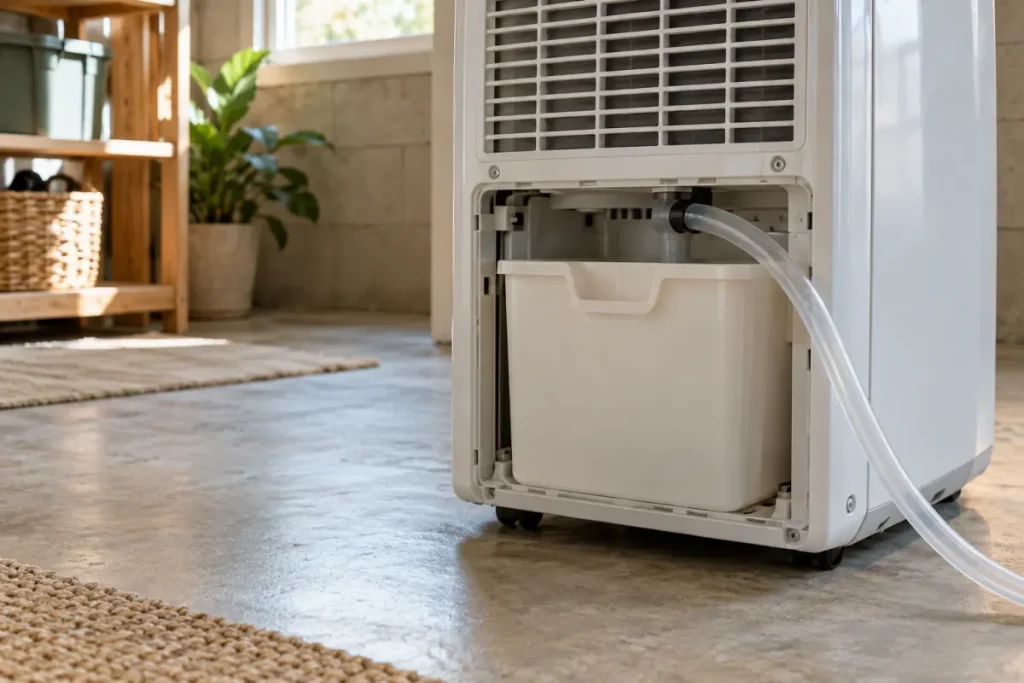
Follow the manual for allowing residual water to drain and for any hose or pump preparation. A bucket that has been emptied does not document the condition of every drainage component. Do not tip the unit or improvise an internal drain procedure to force water out.
Check the storage space as well as the appliance
Choose a place that meets the storage conditions in the manual. The GE manual linked from ADHE50WWF, page 3 includes flammable-refrigerant precautions: storage away from continuously operating ignition sources and protection against damage to refrigerant tubing. Read your own appliance’s safety section; an apparently convenient spot beside heating equipment may be unsuitable.
A cover or carton is for an unplugged appliance in storage. Remove it before use and restore the required clearances. Ask the manufacturer if the manual does not resolve a storage condition, a damaged component, or how to handle a particular connection.
Leave a short storage record
The following is our blank organizer. Enter only completed actions; leave unknowns visible. It adds a restart handoff to your maintenance history without inventing a service interval.
| Field | Your record |
|---|---|
| Model and manual | Model; manual URL or filename; relevant pages |
| Storage preparation | Date; permitted cleaning completed; drying checked; unresolved items |
| Drainage components | Bucket, hose, or pump; model instructions followed; accessories retained |
| Storage location | Position; storage conditions and safety instructions checked |
| Restart requirements | Manual reference; any specified upright or waiting period |
| First use next season | Date; mode and target; room conditions; observed drainage or warning |
Prepare the first use next season
Before reconnecting power, check the model’s instructions, visible cord and appliance condition, bucket and permitted filter installation, and any drainage connection. Restore the supported position and clearances. Our gravity-drain checklist can help record a hose route; it does not replace the manufacturer’s connection procedure.
Follow the stated restart or transport wait, if one applies. For example, the Frigidaire manual says that model must be upright for one hour before operation. Do not turn this into a waiting period for all dehumidifiers.
Check the operating temperature limits, select a supported setting, and observe the first collection and drainage cycle. Record a warning or leak accurately and follow support instructions. A complete storage record makes that first check easier to interpret.